
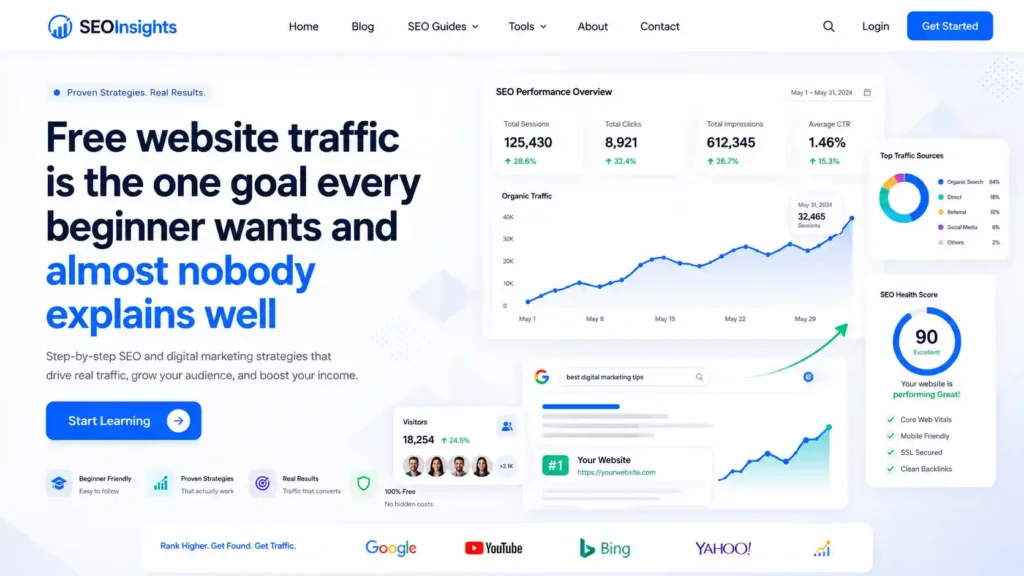
Free website traffic is the one goal every beginner wants and almost nobody explains well. You build a site, write a few posts, hit publish, and then wait for visitors who never show up. That quiet stretch is common, and it’s fixable.
Here’s the good part.
Organic search alone brings in roughly 53% of all website traffic, and it costs nothing beyond your time. Add in platforms like Pinterest, YouTube, and Reddit, and you end up with several solid free traffic sources 2026 that a beginner can start using this week.
This guide covers what free website traffic actually means, why it matters for someone just starting out, and how to drive traffic without ads using channels that cost time, not money. Stick around for the mistakes most beginners repeat and a few pro moves that rarely get talked about.
Let’s get your website some visitors.
My Best Recommended & Proven Way to Make $50-$100 Daily – Watch This FREE Video to START >>>
What Is Free Website Traffic?
Free website traffic means visitors who land on your site without you paying for an ad, a sponsored post, or a paid placement anywhere. It usually comes from four places:
- Search engines, including Google, Bing, and AI tools like ChatGPT and Perplexity
- Social platforms, such as Pinterest, YouTube, LinkedIn, and Instagram
- Referrals, meaning links from other websites, forums, and communities like Reddit and Quora
- Direct visits, from people who bookmark your site or type your web address straight into their browser
This is different from paid traffic, where you hand money to Google Ads, Meta, or another platform in trade for clicks. Free traffic takes longer to build, but it keeps working long after you publish. It also tends to bring visitors who trust your content more, since they found you on their own instead of being shown a paid placement.
Why Free Traffic Matters for Beginners
New website owners often assume ads are the quickest way to get seen. That can work, but it stops the moment the budget runs out. Free traffic builds something you keep.
A few numbers explain why this matters right now:
- Organic search sends roughly 53% of all website traffic, and the top result on Google earns close to 40% of clicks for a given search.
- HubSpot’s 2026 State of Marketing Report found small businesses are 23% more likely than the average company to see a payoff from blog posts.
- Long, specific search phrases (often called long-tail keywords) make up around 70% of all search traffic and pull in close to 1.76 times more clicks than short, competitive keywords.
That last point matters a lot if you’re just starting out. You don’t need to outrank a huge brand for a broad word like “traffic.” You need to answer one specific question that a real person typed into Google today.
AI search adds another reason to care about this now. A 2026 study covered by Contently found that close to half of the pages quoted inside Google’s AI Overviews rank outside the top 50 organic results. A smaller site with a clear, well-organized answer can still get picked up and sent readers, even without a top-of-page ranking.
How to Get Traffic to Your Website for Free: A Step-by-Step Guide
Here’s a quick look at where beginners tend to get the fastest wins, and how long each one usually takes to pay off.
- SEO and blog content works best for long-lasting, evergreen topics, and usually takes 3 to 6 months to show results.
- Pinterest works best for visual topics like food, home, and fashion, and usually shows results in 4 to 8 weeks.
- YouTube works best for tutorials, reviews, and how-to content, and usually takes 2 to 4 months to build steady views.
- Reddit and Quora work best for niche communities and quick feedback, and can bring visitors within days to a few weeks.
- LinkedIn and Medium work best for professional and B2B topics, and can bring visitors within days to a few weeks.
- An email list works best for turning one-time visitors into repeat ones, and pays off on an ongoing basis once you have any traffic at all.
1. Build Content Around Real Search Questions
Open Google, type a topic your audience cares about, and read the “People also ask” box. Those are real questions with real search volume behind them.
Write a post that answers one of those questions in the first two sentences. Search engines and AI tools both pull from pages that get to the point fast, not ones that bury the answer under a long backstory.
2. Turn Pinterest Into a Traffic Engine
Pinterest behaves like a visual search engine, not a typical social feed. It sends around a third more referral traffic than Facebook, which makes it one of the strongest free traffic sources 2026 has to offer for blogs, recipes, home projects, and product pages.
Create a Pin for every post you publish. Put a clear, readable title right on the image, since Pinterest users scroll fast and decide whether to click in under a second.
3. Use YouTube for Search, Not Just Views
YouTube is a search engine owned by Google, and it rewards clear, useful videos much the same way Google rewards clear, useful pages. A short video that answers one question and links to your site in the description can bring steady visitors for years after you upload it.
4. Show Up Where Your Audience Already Talks
Reddit, Quora, and smaller topic forums put you in front of people already searching for answers. Answer questions honestly first, and share your link only when it truly helps. These communities notice and remove self-promotion fast, so build a bit of trust before you post anything with a link.
5. Post Directly on LinkedIn and Medium
LinkedIn and Medium both come with their own reach built in. Publish a shorter, platform-friendly version of your post with a link back to the full article on your site. This puts your writing in front of new readers without spending a cent.
6. Build an Email List From Day One
Every visitor who lands on your site once can come back for free, over and over, if you get their email address. Add a simple sign-up box that offers something useful, like a short checklist or guide, and your traffic starts to add up instead of disappearing after a single visit.
7. Get Other Sites to Link to You
A link from another website tells search engines your page is worth trusting. Reach out to smaller blogs in your niche, offer to write a guest post, or ask to be added to a resource list. You don’t need hundreds of links. A handful of good, relevant ones beats a big pile of weak ones.
My Best Recommended & Proven Way to Make $50-$100 Daily – Watch This FREE Video to START >>>
Common Mistakes to Avoid When Chasing Free Traffic
Beginners tend to repeat a small set of mistakes:
- Publishing without a plan. Random posts on random topics rarely rank well. Pick a small group of topics your audience actually searches for, and cover each one well.
- Writing for search engines instead of people. Stuffing keywords into every sentence reads badly, and search engines can tell. Write for the person first, then check your keyword use after.
- Giving up after two weeks. Ahrefs’ own data shows almost 97% of pages get zero organic traffic, mostly because most site owners stop posting right before their content has had time to rank.
- Ignoring visitors on their phones. Most searches happen on mobile now. A slow, hard-to-read site loses people before they finish reading a single sentence.
- Skipping an email list. Traffic you never capture is traffic you have to win all over again next time around.
Pro Tips for Faster Results
- Answer the question in your first two sentences. Readers and AI search tools both reward pages that get to the point fast, instead of pages that warm up for three paragraphs first.
- Update old posts instead of only writing new ones. A year-old post with fresh numbers and a cleaner structure often outperforms a brand-new page with none of that history.
- Add real numbers and name your sources. Pages with clear stats and named sources tend to get quoted more often inside AI answers and featured snippets.
- Track what actually brings visitors. Free tools like Google Search Console and Google Analytics show which posts and keywords bring people to your site, so you can write more of what already works.
FAQs About Free Website Traffic
What is the fastest way to get free traffic to a new website?
Answering a specific, low-competition question well, then sharing it on a platform where your audience already spends time, such as Pinterest or Reddit, tends to bring visitors the fastest. Broad SEO usually takes longer to pay off.
How long does it take to see free traffic from SEO?
Most new sites start seeing steady search traffic somewhere between three and six months after consistent posting, though a specific, low-competition topic can rank sooner than that.
Can I get free website traffic without using social media?
Yes. Search-driven content, guest posts, and forum answers can all bring visitors without ever opening a social account, though social platforms usually speed up the early stretch.
Is free traffic better than paid ads?
Free traffic keeps working after you publish, and it tends to bring visitors who trust your content a bit more. Paid ads work faster but stop the moment you stop paying for them. Many site owners use both: free traffic for the long run, and small ad budgets for quick tests.
Do I need a big budget to increase website traffic free of ads?
No. Most free traffic sources cost time, not money. A phone camera, a free blog platform, and a Pinterest or YouTube account cover the basics for almost anyone starting out.
Which free traffic source works best for beginners?
Search-driven blog content paired with Pinterest tends to work well for beginners, since both reward a clear, well-organized post over follower counts or ad spend.
What mistake stops most beginners from getting free traffic?
Giving up too soon. Search traffic and platform reach both take a few months to gain momentum, and most site owners stop posting right before results start to show.
My Best Recommended & Proven Way to Make $50-$100 Daily – Watch This FREE Video to START >>>
Conclusion: Start Getting Free Website Traffic Today
Free website traffic isn’t a trick that pays off overnight. It’s a habit: answer a real question, share it where your audience already spends time, and give search engines and AI tools a clean, clear answer to point to.
Start with one post this week. Pick one real question your audience is typing into Google right now, write the answer, and share it on one platform from the list above. Then let it work for you while you write the next one.
Pick your first target keyword today, write the post, and hit publish. That’s the whole plan, one step at a time.
Source: Free website traffic is the one goal every beginner wants and almost nobody explains well
Affiliate Disclaimer :
Some of the links in this article may be affiliate links, which means I receive a small commission at NO ADDITIONAL cost to you if you decide to purchase something. While we receive affiliate compensation for reviews / promotions on this article, we always offer honest opinions, user experiences and real views related to the product or service itself. Our goal is to help readers make the best purchasing decisions, however, the testimonies and opinions expressed are ours only. As always you should do your own thoughts to verify any claims, results and stats before making any kind of purchase. Clicking links or purchasing products recommended in this article may generate income for this product from affiliate commissions and you should assume we are compensated for any purchases you make. We review products and services you might find interesting. If you purchase them, we might get a share of the commission from the sale from our partners. This does not drive our decision as to whether or not a product is featured or recommended.